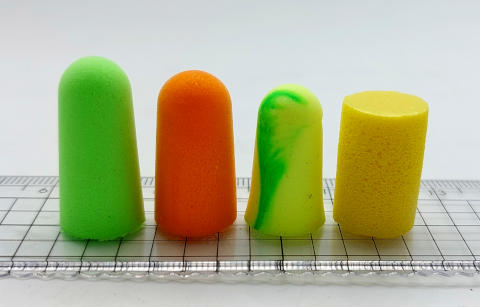
This morning, I inserted a fresh pair of foam earplugs for a noise reduction test. Twenty minutes in, the left one started becoming uncomfortable. I re-inserted the offending earplug. A few minutes later, the other one started hurting. By the end of the hour-long test, I could barely keep them in my ears.
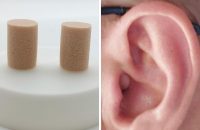
These were the same earplugs I’d slept with comfortably for three consecutive nights. The same batch, the same insertion technique. But something clearly had changed, in this case, in my ear:
I had developed pressure points and had to give my ears a break from that particular type.
What if you rely on earplugs for a good night’s sleep or even everyday hearing protection and they suddenly don’t work anymore?
If I depended on just this one type of earplug, I’d have been in trouble. But I wasn’t concerned. I have alternatives ready – Moldex Pura-Fit, 3M EAR Classic, 3M 1100 – and I know from experience they all seal my ear canal at different points.
Pressure points aren’t the only way in which earplugs have failed me:
The manufacturer changed the formula without notice. I found out when I ordered a new batch and received a slightly or even vastly different earplug. I had to find a replacement.
My earplugs became itchy: I had developed sensitivities to the material. I had to give my ears a break.
The basic idea is this:
You need at least two different types of foam earplugs that work for you if you have to rely on their performance and comfort.
Contents
Formula changes are real
“Earplugs Y have changed; now they hurt or now they don’t block noise anymore. What do I do now?”
I have gotten this request for advice many times.
And, I’ve experienced these changes myself with earplugs I used to recommend:
Flents Quiet Please, Hearos Xtreme Protection, Mack’s ThermaFit, etc.
The Flents Quiet Please even switched from PVC to PU foam – very different earplugs marketed under the same familiar name. These were once stellar earplugs that had a massive fan base.
Quiet Please: Left: new formula, right: old formula
This is not to knock these companies! Often distributors don’t want to make these changes, but they may have no choice.
Many rely on third-party suppliers for the raw materials (the foam) or even the finished plugs. When their supplier stops offering the product, they scramble to find alternatives, which may or may not work for you.
You can’t prevent manufacturers from changing formulas. But you can prevent being left without options when it happens.
Pressure point build-up
Using the same earplugs day after day or night after night means they consistently press against the same spots in your ear canal. Eventually, these spots start complaining.
Different shapes distribute pressure differently.
Cylindrical PVC earplugs like the 3M EAR Classic press against the ear canal in a very different way compared to the tapered PU Moldex Pura-Fit 6800.
For me, rotating between these two types solves this problem.
From left: Pura-Fit 6800, EAR Classic
Sensitivities to the earplug material
You can develop sensitivities to a specific material or finish. I’ve experienced itchiness with both PVC and PU foam earplugs, but more so with PVC. The solution? I give my ears a break by switching to an alternative for a week or so. So far my tolerance has always returned.
Different foam earplugs excel at different tasks
In my ears, the yellow EAR Classic are exceptional at blocking low-frequency noise (LFN) – truck rumble, bass from music, stomping from upstairs neighbors.
To be clear: They are good against all types of noise, but that great low-frequency performance together with the very low ear pressure is their “superpower.”
But suppose your problem is barking dogs. In that case, you don’t need to focus on LFN. The green Moldex Pura-Fit perform slightly better against all but the lowest pitched dogs. Overall, and in particular against mid-frequency noise, they outperform the EAR Classic.
But, when I face low-frequency challenges like stomping from upstairs or traffic rumble, I am glad to have the EAR Classic ready.
Durability, reuse, and waste
Most foam earplugs are marketed as disposable. For hearing protection in an occupational setting, using a new pair every day may be prudent, in particular if your hands get dirty during your work day.
But many nighttime users (reasonably) don’t want to toss out their earplugs after a single night. Costs aside, you also have to consider the waste.
I’ve found that PVC foam earplugs, such as the EAR Classic, typically become ineffective faster than PU foam plugs – I am getting roughly three days versus a week for something like the Moldex Pura-Fit or the 3M 1100.
I need the Classic (and maybe you’d want them too), but I don’t need them all the time. So in the long run, by using two different types I can actually save money and reduce waste.
How to take action: start with two types
You don’t need several dozen types like me. Start with two.
Find one type of foam earplugs that works for you. Use them for a while until you’re confident they are reliable. Then test a second option. If the plugs don’t work for you, discard them and try another type. If they do, you have your backup system.
How to rotate?
Unless your earplugs start becoming uncomfortable, itchy, or ineffective, use them until you would naturally toss them out (for me perhaps a week max for night time use) and then switch to a pair from your second favorite.
This natural rotation helps you to avoid developing pressure points and lets you learn how each type performs over time in your ears and noise environment.
And, importantly, you’ll regularly practice insertion with both types and always have a working backup you are confident in.
The key is having a system in place before you need it.
Options to consider
Here are some good options to consider, whether you are starting from scratch or looking for a backup to what you already use.
These are by no means the only good earplugs out there. I am recommending them based on my experience.
Note about ratings in case you are looking for hearing protection:
NRR (U.S.) and SNR (Europe) are obtained via different methodologies and are not directly comparable. SNR values are typically higher than NRR values if an earplug has both. In the U.S., hearing protectors come with an EPA label that states the NRR.
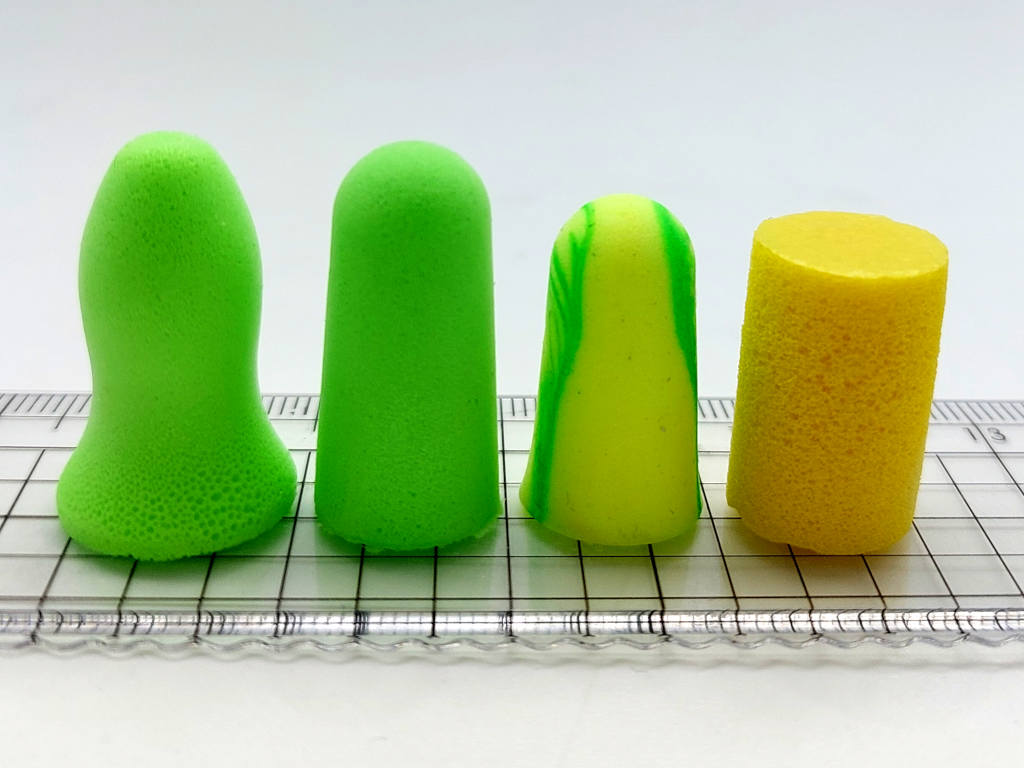
From left: Pura-Fit 6800, 3M 1100, Pura-Fit 7700, EAR Classic
Moldex Pura-Fit 6800 (NRR 33) – Good for normal to slightly longer ear canals. Great overall performance across all noise types and very durable. They stay compressed for a good while after rolling them up, which makes insertion easier. If you have a shorter ear canal, you can roll up just the tapered end while keeping the top, creating a nail-like shape. This reduces performance to similar levels as the next option, the European Moldex Pura-Fit 7700. Fully inserted, the 6800 significantly outperform the 7700 in my ears, but don’t let the perfect be the enemy of a comfortable fit.
For more info on these earplugs, read my comparative review of the Pura-Fit 6800.
Moldex Pura-Fit 7700 (No NRR, Europe/UK only, SNR 35) – I got a large batch of these on a recent trip to Europe and have used them quite a bit while traveling. They are a lot shorter than the 6800 but about the same diameter and material. They offer good overall performance and are durable. I find them very comfortable and easy to insert. They work well for shorter ear canals without requiring insertion tricks. They are not ideal for low-frequency noise but overall perform well in my ears (albeit not as well as a fully inserted 6800). I am pointing these out for my European readers. Since they have no NRR, they are not for U.S. users looking for hearing protection. I’d love for them to be also available in the U.S. and even come with an NRR.
3M EAR Classic (NRR 29) – They are excellent at blocking low-frequency noise – Against LFN, in my ears they outperform all others mentioned here by quite a margin. They are the first foam earplugs ever and somewhat of a unicorn: they create very little pressure in the ear while delivering their great LFN reduction performance. The Classic take a bit more practice to roll up and expand a bit faster than the Moldex PU foam earplugs. They also don’t last as long. At times, I get itchy ears from these, but taking a break for a week resolves this. I would not want to be without the EAR Classic.
For more info, including sizing options, also read my review and noise reduction test of the 3M EAR Classic.
3M 1100 (NRR 29) – These are very comfortable PU earplugs and a solid noise blocker. Initially, they appear a bit stiff but become very soft in the ear. They are shorter than the Pura-Fit 6800, making them a good choice if you find the 6800 too long.
Caveat: In my experience, the 1100 are less suitable for a warm, humid climate (unless you have AC of course). In such a climate, they can get squishy and expand fast upon rolling them up, making them difficult to insert. For the same reason, they are not easy to reinsert directly after removing them. You have to let them cool down first. The upside to this: the warmth of the ear makes them soft and comfy.
What if tapered and cylindrical foam ear plugs don’t work for you?
Moldex/Flents also offer bell-shaped earplugs in two sizes. For me, the large ones (Quiet Contour) work well. They are good earplugs IMO. Still, I mostly prefer using tapered and cylindrical plugs. But, if you have a hard time with other shapes, maybe these could be the answer.
If you don’t have any foam earplugs you like yet or your former favorites don’t work for you anymore, pick a tapered PU option like one of the Moldex Pura-Fit described above and get the cylindrical PVC EAR Classic. If you find yourself liking both (like I do) you have a durable PU option and a cylindrical low pressure earplug that could be your savior against traffic rumble and other low-frequency noise.
Use both regularly and you’ll be confident you have a backup when you need it.